
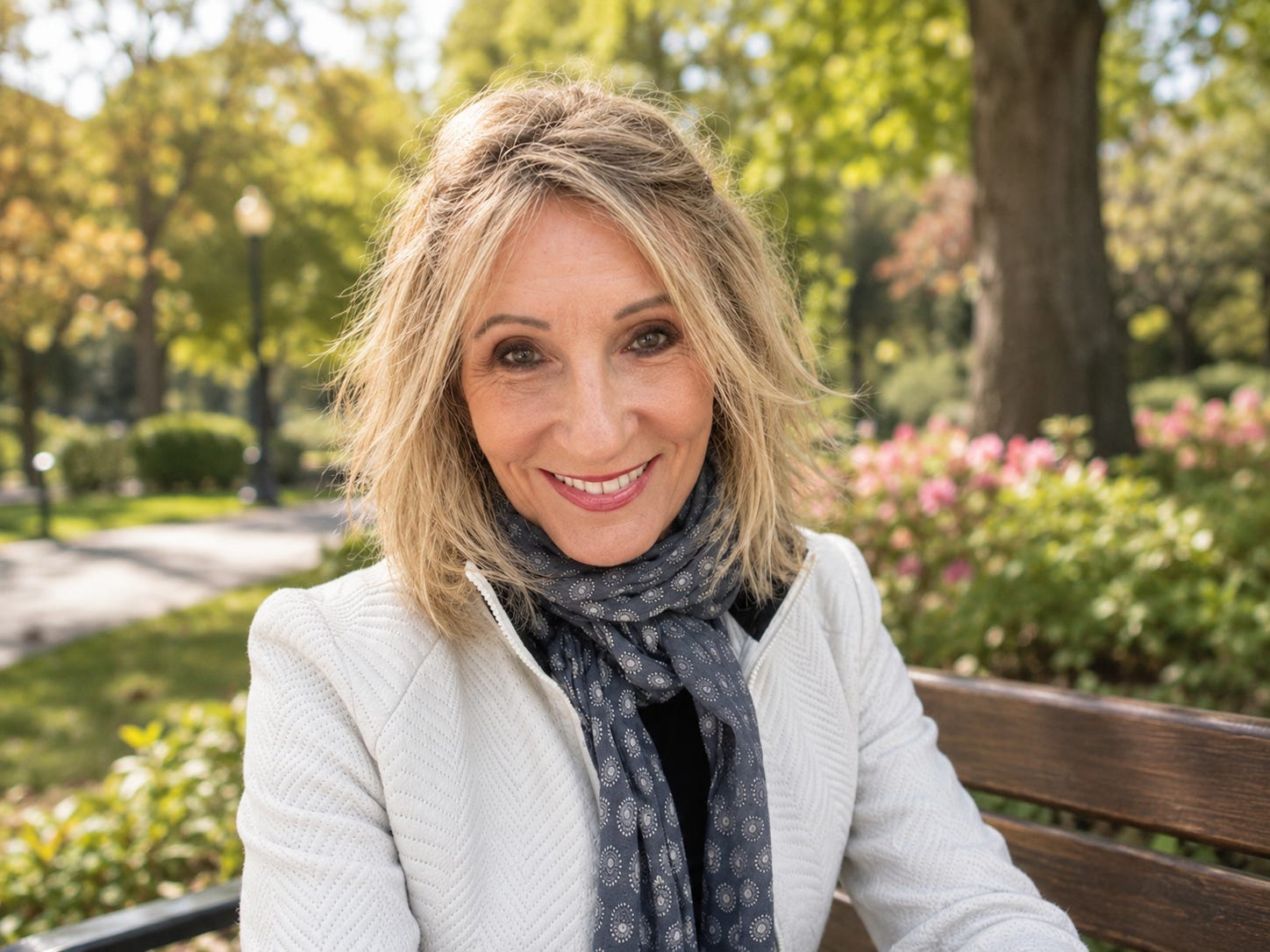
A reader sent me a thoughtful note this week. He asked me to write a little about myself - and explain how I came to know so much about APOE4.
It was a fair question.
The internet is full of people who sound credible. Some have impressive credentials. Others don’t. Some are careful with their claims. Others aren’t. We all have to decide whose information is worth our time and trust.
So here’s my honest answer.
I’m not a physician. I‘m not a neuroscientist. I don’t have a PhD.
I’ve never worked in a laboratory or published a scientific paper.
What I do have is a lifelong curiosity, a healthy skepticism, and a stubborn determination to understand things that matter.
Professionally, I spent nearly four decades building a business from the ground up in a highly technical industrial tooling sector. What started small eventually grew into a company serving customers across North America and beyond.
Then Covid arrived - and in an unexpected way, it was something of a gift.
For the first time in decades, I had time. Time to sit with my morning coffee and actually enjoy every sip. Time to take long, unhurried walks with our dogs, Tilly and Molly, alongside my already-retired husband. Time to actually smell the roses - literally and figuratively. The relentless pace I had known for forty years simply... stopped.
It turned out I needed that.
I decided the time had come to step back - and prepare for a proper transition of my company while I’m still here to witness it! Today I stay involved in the parts of the business I enjoy most - strategy, problem-solving, key relationships - while the day-to-day responsibilities have passed to the next generation.
Covid reminded me that there is a life worth protecting beyond the business.
Our grandchildren are a big part of that. And perhaps that's what drove me so deeply into the research once I learned about my APOE4 status.
Those years building a business taught me something I’ve never forgotten: good decisions require more than opinions or intuition. Claims must be evaluated. Assumptions must be challenged. Facts matter. Data matters. Real-world results matter.
When I learned about my APOE4 status, I applied the same mindset.
In early 2018, I decided to do a 23andMe test. I already knew my ancestry, so that wasn't what prompted it. A positive coronary artery calcium (CAC) score had gotten my attention, and I was searching for answers - particularly because my father had died of a massive heart attack at age 73.
I still remember the exact moment I opened the 23andme results. It’s a bit like a snapshot frozen in time.
I was standing in my west-facing sunroom as the sun was beginning to set. I opened the report and read six words that would quietly alter the course of my life:
You have two copies of APOE4. You have an increased risk of Alzheimer’s Disease.
My mother carried one copy of APOE4 and one copy of APOE2. She lived to almost 96 and didn’t begin showing signs of cognitive decline until around 90. She still knew who I was until the end.
So my interest in APOE4 wasn’t driven by a family history of early Alzheimer’s. It was driven by something simpler - curiosity, a desire to understand my own risk, and a determination to do everything reasonably possible to protect my cognitive health until that last breath.
I started reading. Then listening - podcasts, interviews, lectures, on-line conferences and books. I learned enough to realize how much I didn’t know. So I kept going..
Eventually, I realized that science isn't a collection of final answers. It's a process of asking better questions - and being willing to change your mind when the answers change.
Over time, I developed my own approach. I read beyond headlines. I pay attention to study design. I look for consensus where it exists and acknowledge uncertainty where it doesn’t. I cross-reference and cross-examine across three different AI platforms - querying, reframing questions, and digging for detail that a single source might miss.
When I share something, I try to be clear about what it is: established evidence, emerging research, expert opinion, or my own conclusions.
Most importantly, I hold all of this loosely. New evidence changes things, and I'd rather update my thinking than defend a position.
There are things I believed three years ago that I no longer believe. There are things I’m doing today that I may stop doing tomorrow if better evidence emerges. I consider that a strength, not a weakness.
So why should anyone trust what I write?
Honestly - you shouldn’t trust me blindly. You shouldn’t trust anyone blindly. What I’d ask instead is that you trust my process. Trust that I genuinely care about getting it right. Trust that I’ll tell you when something is supported by strong evidence and when it’s merely a promising theory. Trust that I have no clinical practice to fill, and no financial incentive tied to any particular outcome as this is - and will remain - a free Substack!
APOE4 risk is a topic too important to hide behind a paywall. That said, I'm putting the finishing touches on a members-only site where I'll share my personal Alzheimer's prevention blueprint - but this newsletter will always remain free.
And believe this: I have skin in the game.
I want to preserve my cognition, my independence, and my quality of life for as long as possible. I want to stack the odds in my favor. I suspect you do too.
Perhaps the best way to explain my approach to life is through a story from when I was eighteen.
In 1970, my sister and I hitchhiked from Germany through Switzerland, France, and Spain - then crossed the Strait of Gibraltar by ferry to Morocco, where we somehow decided to keep hitchhiking from Tangier to Casablanca.
Looking back, it was equal parts adventurous and reckless. In many ways, it marked the beginning of a fiercely independent streak that would shape much of my life in the decades that followed. The trip gave me confidence, strengthened my sense of self-reliance, and taught me that some of life's greatest rewards lie just beyond the boundaries of what feels comfortable.
It captures something fundamental about who I am. Whether it's a new country, a new challenge, or a complex scientific question, my response has usually been the same: let's see what's on the other side.


Discovering that I carry two copies of APOE4 felt, in many ways, like stepping into unfamiliar territory. The science was complicated. The risks were frightening. The answers were often unclear.
But I’ve never been one to turn back simply because the road ahead looks uncertain.
So I keep reading. I keep learning. I keep asking questions.
And I keep sharing what I find.
After all, I’ve always been more interested in exploring what’s over the next hill than standing still wondering about it.
Thank you for being part of the journey.
Karin Dee
A note: Dee is not my last name. I'm relatively well known in my industry, and I made the deliberate choice to write under a partial name. There is still real stigma attached to this gene - Chris Hemsworth learned that firsthand when headlines declared he had an "Alzheimer's diagnosis" based solely on his APOE4 status. But that's the kind of distortion that follows this topic, and I'd rather keep my professional life separate from it.
You are an adventurous person. I'm the curious person. I always wonder why things are the way they are. I have listened to many podcasts on YouTube about cardiovascular disease with William Cromwell MD, Ronald Krauss MD and Dr. Thomas Dayspring. I had a discussion with James O'Keefe MD about APOE4 and how carrying this gene effects lipid profiles and consumption of saturated fats. I'm APOE4/APOE3. Dr. O'Keefe recommended I follow you on Substack. I never heard of Substack before. I'm enjoying Substack. I focus only on health and medical discussions on it. I'm glad I found you.
I can remember opening the 23Me results. I was devastated. Now I am hopeful, about to celebrate my 69th birthday with (mostly!) my memory in tact. I exercise daily and try to stay within moderation in my diet. Thank you for sharing your knowledge and research. Great Substack!