
When people hear the word “sauna,” many immediately think detoxification, relaxation, or a wellness luxury.
But for those of us carrying APOE4, sauna use may represent something far more important: a powerful hormetic intervention that supports vascular health, mitochondrial resilience, inflammation reduction, sleep quality and potentially dementia risk reduction.
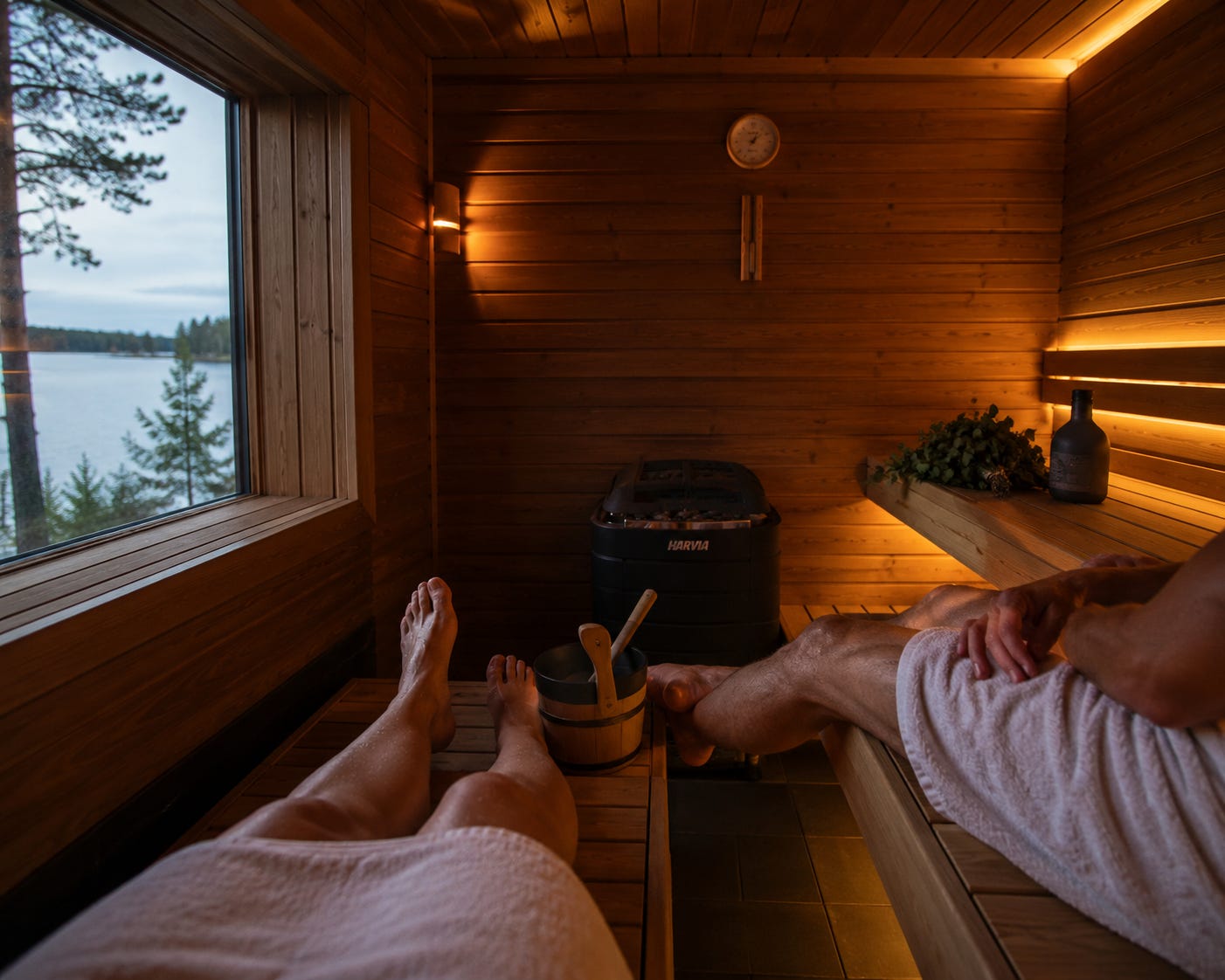
After years of using an infrared sauna, I recently made the decision to replace it with a traditional Finnish-style sauna - the kind capable of reaching true high heat.
My new sauna arrives in July.
And the more deeply I reviewed the research, the more convinced I became that this was the right move.
The APOE4 Brain and Heat Stress
APOE4 brains appear to be uniquely vulnerable to:
impaired glucose metabolism
vascular dysfunction
chronic inflammation
mitochondrial stress
reduced synaptic repair
impaired clearance of metabolic waste
reduced resilience to aging stressors
Many of the interventions that appear most beneficial for APOE4 carriers share one common feature:
They create a carefully controlled biological stress that forces the body to adapt and become more resilient.
Exercise. Fasting. Cold exposure. Hyperbaric oxygen. Resistance training. Heat.
Sauna belongs squarely in that category.
What the Research Actually Shows
Some of the strongest sauna data comes from Finland, where traditional high-heat sauna bathing is deeply embedded in the culture.
One of the landmark studies followed more than 2,000 middle-aged Finnish men over decades and found something remarkable:
Men who used a sauna 4–7 times per week had dramatically lower rates of dementia and Alzheimer’s disease compared to those using it only once weekly.
The reductions were substantial:
lower dementia incidence
lower Alzheimer’s incidence
lower cardiovascular mortality
lower all-cause mortality
This matters enormously for APOE4.
Why?
Because vascular dysfunction and impaired cerebral blood flow are increasingly recognized as central drivers of neurodegeneration.
And sauna appears to strongly influence vascular health.
Sauna Is Probably a Vascular Therapy as Much as a Heat Therapy
During a proper sauna session:
heart rate rises significantly
blood vessels dilate
circulation improves
endothelial function improves
blood pressure often decreases afterward
nitric oxide signaling increases
cardiac output rises
Some researchers have even described traditional sauna bathing as producing cardiovascular effects similar to moderate exercise.
For APOE4 carriers - who often struggle with endothelial dysfunction and impaired cerebral perfusion decades before cognitive symptoms appear - this becomes highly relevant.
Heat Shock Proteins: The Cellular Repair Crew
One of the most fascinating mechanisms behind sauna therapy involves heat shock proteins.
These are highly conserved protective proteins produced when cells encounter stress.
Heat shock proteins help:
refold damaged proteins
stabilize mitochondria
improve cellular resilience
reduce oxidative stress
support autophagy
improve protein quality control
Protein misfolding is one of the hallmarks of neurodegenerative disease.
Anything that enhances cellular housekeeping becomes potentially important.
And high-heat sauna exposure appears to be one of the most potent natural inducers of heat shock proteins.
Why I Moved Away From Infrared
This is where things become controversial.
Infrared saunas are extremely popular in wellness circles.
They are marketed heavily for:
detoxification
convenience
comfort
easier heat tolerance
And to be fair, infrared saunas absolutely can induce sweating and mild heat stress.
But after digging through the literature, I became increasingly unconvinced that infrared reproduces the physiological intensity seen in the Finnish sauna studies.
The majority of the research showing reductions in dementia and cardiovascular mortality involved:
traditional Finnish saunas
very high ambient temperatures
repeated cardiovascular challenge
significant core temperature elevation
Many infrared saunas operate in the range of 120–140°F. (mine usually took 30 minutes to get to 130°F).
Traditional Finnish saunas commonly operate between 170–200°F.
That is not a small difference.
The physiological experience is entirely different.
A true Finnish sauna creates:
far greater cardiovascular demand
stronger vasodilation
more profound heat shock protein activation
higher heart rate elevation
greater thermoregulatory adaptation
In many infrared saunas, users can comfortably sit for long periods while barely elevating cardiovascular output.
The “Sweet Spot” Appears to Be Repeated High-Heat Exposure
Based on both the Finnish data and mechanistic studies, the apparent sweet spot for brain and cardiovascular benefits seems to involve:
temperatures roughly 170–190°F
sessions around 15–25 minutes
repeated exposure multiple times weekly
enough heat to meaningfully elevate heart rate and core temperature
Frequency appears to matter.
The strongest protective associations in the Finnish data were seen in people using saunas 4–7 times weekly.
That does not mean everyone needs daily sauna use. But it does suggest that occasional casual use may not generate the same adaptations.
Sauna and Sleep
One of the most immediately noticeable benefits many people experience is improved sleep.
Paradoxically, raising body temperature before bed often improves the body’s later cooling response, which supports deeper sleep onset. I will wait to test that in July - as my infrared sauna usually kept me awake and gave me less restful sleep if I used it at night.
For APOE4 carriers, sleep quality matters enormously.
Deep sleep is when the brain’s glymphatic system becomes most active.
That is the system involved in metabolic waste clearance, including amyloid clearance.
Anything that reliably improves deep sleep may have downstream implications for long-term brain health. If better sleep holds true for me, I’ll report back once I have used my new sauna for a while.
Sauna Is Not a Free Pass
I do think sauna is a powerful tool. But it is not a magic bullet.
No one should imagine they can:
ignore metabolic health
remain sedentary
eat a highly inflammatory diet
neglect sleep
ignore insulin resistance
avoid strength training
…and then “sauna their way out” of APOE4 risk.
Sauna works best as part of a larger prevention-focused lifestyle.
It is one signal among many telling the body:
Adapt. Repair. Become more resilient.
Practical Considerations for APOE4 Carriers
If you are considering sauna use:
Hydration matters.
Electrolytes matter.
Start slowly.
Heat tolerance improves over time.
Avoid pushing to dizziness or exhaustion.
Be cautious with uncontrolled hypertension or cardiovascular instability.
And importantly:
The goal is not maximal suffering. It is repeated, tolerable adaptation.
Consistency likely matters more than heroic sessions.
Why I’m Excited About My New Sauna
On a recent trip to Paris, I used the Finnish sauna daily at our hotel. I noticed the difference in heat and since there was also a pool, I cooled off nicely after the sauna session. I felt wonderfully relaxed, yet invigorated afterwards.
My infrared sauna served a purpose. But ultimately, I now want the real thing:
higher heat
stronger cardiovascular conditioning
more robust heat shock response
a more authentic Finnish-style experience
Given everything we currently know about APOE4, vascular health, mitochondrial resilience, and hormesis, I suspect it may become one of the most valuable tools in my prevention toolbox.
Final Thoughts
If I had to summarize the sauna literature for APOE4 carriers, it would be this:
Heat - when applied intelligently and consistently - appears to train resilience across nearly every system APOE4 tends to stress.
The brain. The vasculature. The mitochondria. The inflammatory system. Sleep. That does not mean sauna is a cure, but it may very well be one of the most evolutionarily ancient and biologically coherent interventions we have.
And unlike many expensive therapies in longevity medicine, this one has thousands of years of human history behind it.
Interesting Research Links:
https://pubmed.ncbi.nlm.nih.gov/41848374/
https://www.mayoclinicproceedings.org/article/
Yes! Just did the same. I just stumbled upon your profile (I’m a former scientist and fellow apoe4). I’m actually VERY excited about a new once daily pill that might get approved in Europe this year for Alzheimer’s. You can read about it in my article today. I plan to get hold of it as soon as available… even though the data for AD won’t be available for another two years or so.
Please feel free to share with other APOE4-ers!
https://datadosing.substack.com/p/an-alzheimers-drug-hiding-in-a-cholesterol
Reframing sauna as a vascular therapy reframes the whole conversation for APOE4 carriers, where endothelial dysfunction starts decades before symptoms. The frequency data from the Finnish cohort is particularly worth sitting with. Great article, Karin!